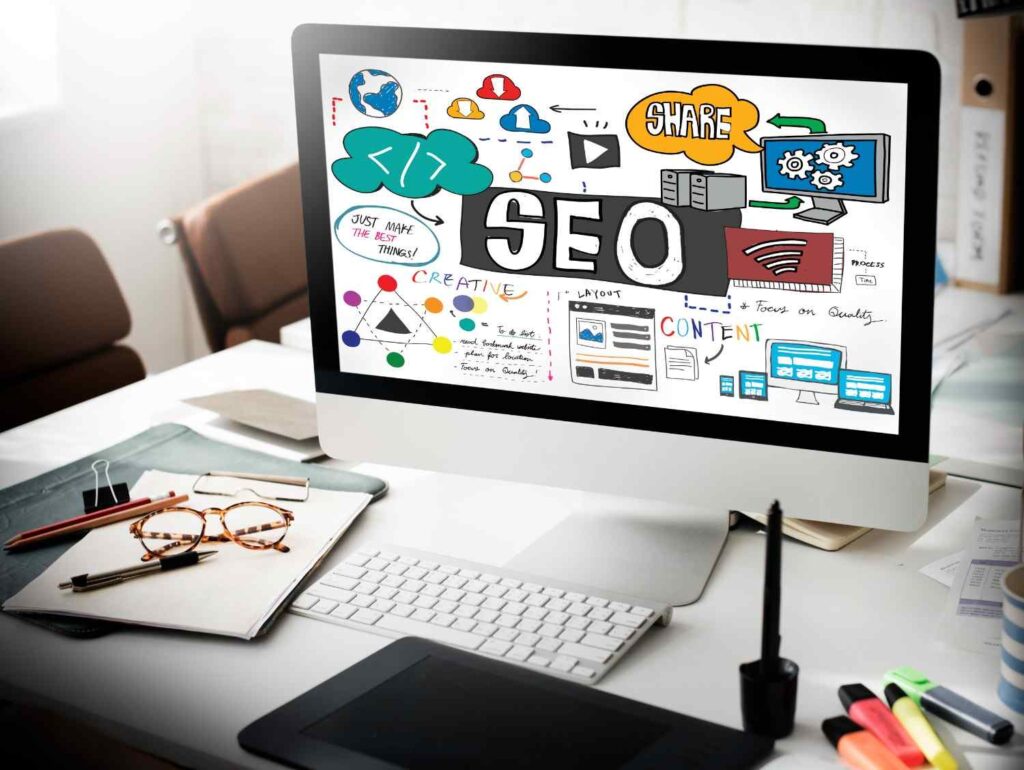


SEO in 2026: Why Ranking on Google Still Matters for Your Business
Introduction: SEO in a Rapidly Changing Digital World
Search Engine Optimization (SEO) has evolved significantly over the past decade, yet its core purpose remains unchanged: helping businesses get discovered by the right audience at the right time. As we step into 2026, many businesses are questioning whether SEO is still relevant in a world dominated by artificial intelligence, social media platforms, paid advertising, and instant gratification marketing tactics.
The simple answer is yes—SEO still matters, and in many ways, it matters more than ever.
Google continues to be the most trusted source of information for users worldwide. When people need answers, solutions, or products, their first instinct is still to search on Google. Ranking on the first page is no longer just about traffic; it is about credibility, trust, and long-term brand authority.
In this article, we will explore why SEO remains essential in 2026, how it builds sustainable business value, the latest SEO trends businesses must follow, and how ethical, user-focused SEO strategies can future-proof your digital presence.
Why Google Rankings Still Define Online Credibility
Trust Begins with Search Visibility
In 2026, consumer behavior has become more informed and research-driven. Before making any decision—whether it’s choosing a service provider, buying a product, or hiring a professional—users turn to Google. Websites that appear on the first page are automatically perceived as more reliable and authoritative.
A high Google ranking acts as social proof. It signals that your business is established, relevant, and trusted by both users and search engines. Even if users don’t click immediately, repeated exposure to your brand name builds familiarity and recognition over time.
First-Page Rankings Drive High-Intent Traffic
Unlike social media or display ads, search traffic is intent-driven. People searching for specific keywords already have a need or problem. When your business ranks for those keywords, you are reaching users who are actively looking for what you offer.
This makes SEO one of the most cost-effective and conversion-friendly digital marketing channels, especially for service-based and local businesses.
[Image Placement Suggestion: Google search results page highlighting first-page rankings and user click behavior]
SEO as a Long-Term Digital Asset
SEO Is Not Instant, but It Is Sustainable
One of the most important aspects of SEO is understanding that it is a long-term strategy, not a quick win. Unlike paid advertising, where traffic stops the moment you stop spending money, SEO continues to deliver results over time.
Once your website achieves strong rankings, it can generate consistent traffic, leads, and sales every day without additional ad costs. This makes SEO a compounding investment—its value grows with time.
Lower Cost per Acquisition Over Time
While SEO requires upfront investment in content, optimization, and technical improvements, the long-term cost per acquisition is significantly lower than paid ads. As your organic traffic increases, your dependency on paid campaigns decreases, improving overall marketing ROI.
For startups, small businesses, and growing brands, SEO provides a stable foundation that supports long-term growth without burning marketing budgets.
[Image Placement Suggestion: Graph showing SEO growth over time versus paid ads traffic decline after budget stops]
How SEO Enhances User Experience in 2026
Google Rewards User-Centric Websites
In recent years, Google’s algorithms have shifted strongly toward user experience. In 2026, this focus is stronger than ever. Search engines prioritize websites that are fast, mobile-friendly, easy to navigate, and valuable to users.
SEO is no longer just about keywords—it is about delivering a seamless experience that keeps users engaged and satisfied.
Key User Experience Factors That Impact SEO
Fast page loading speed
Mobile responsiveness across all devices
Clear site structure and navigation
High-quality, helpful content
Secure browsing (HTTPS)
Low bounce rate and high engagement
When users stay longer on your website and interact with your content, it sends positive signals to Google, improving your rankings further.
[Image Placement Suggestion: Website performance metrics such as page speed, mobile optimization, and engagement indicators]
The Role of Content Quality in Modern SEO
Content Is Still the Backbone of SEO
In 2026, content remains the most critical factor in SEO success. However, the definition of “good content” has evolved. Search engines now evaluate content based on relevance, depth, originality, and usefulness rather than keyword repetition.
High-quality content answers real user questions, solves problems, and provides clear value. Businesses that invest in educational, informative, and well-structured content consistently outperform competitors who rely on thin or AI-generated content without human refinement.
E-E-A-T: Expertise, Experience, Authority, and Trust
Google increasingly emphasizes E-E-A-T signals when ranking websites. Demonstrating industry expertise, real-world experience, authoritative knowledge, and trustworthiness is essential for long-term SEO success.
This includes:
Publishing well-researched content
Showcasing author credentials
Updating content regularly
Earning quality backlinks
Maintaining transparency and authenticity
[Image Placement Suggestion: Content creation workflow or E-E-A-T framework illustration]
SEO Trends Businesses Must Follow in 2026
Understanding User Intent Over Keywords
Keyword stuffing is long gone. In 2026, Google focuses heavily on search intent—why a user is searching and what they truly want. Businesses must optimize content based on informational, navigational, and transactional intent.
Understanding intent allows you to create content that aligns perfectly with user expectations, improving engagement and conversions.
Voice Search Optimization
With the rise of voice assistants and AI-powered devices, voice search continues to grow. Users now search using natural, conversational language. Optimizing content for long-tail, question-based keywords is essential to stay competitive.
Examples include:
“Best digital marketing company in patna”
“How does SEO help small businesses?”
“Affordable SEO services in Patna”
[Image Placement Suggestion: Voice search illustration with smart devices and conversational queries]
The Growing Importance of Local SEO
Local SEO Drives High-Conversion Traffic
For local and service-based businesses, local SEO is one of the most powerful growth channels in 2026. People searching for nearby services are often ready to take immediate action.
Optimizing for local keywords and Google Business Profile helps your business appear in map results, local packs, and nearby searches.
Key Local SEO Elements
Optimized Google Business Profile
Accurate NAP (Name, Address, Phone) details
Local keywords and location pages
Customer reviews and ratings
Local backlinks and citations
Businesses that dominate local search results gain a strong competitive advantage in their service areas.
[Image Placement Suggestion: Google Maps local pack results with business listings]
AI and SEO: Working Together, Not Against Each Other
AI Enhances SEO Strategy
AI tools have transformed how SEO is planned and executed. From keyword research to content optimization and performance analysis, AI helps marketers make data-driven decisions faster.
However, human creativity, strategic thinking, and contextual understanding remain irreplaceable. The most successful SEO strategies in 2026 combine AI efficiency with human expertise.
Avoiding Over-Reliance on AI Content
Search engines are becoming better at identifying low-quality, mass-produced AI content. Businesses must ensure that AI-generated content is reviewed, refined, and enhanced with original insights to maintain authenticity and trust.
[Image Placement Suggestion: Human + AI collaboration concept for SEO strategy]
SEO vs Paid Advertising: A Strategic Comparison
Why SEO Complements Paid Ads
Paid advertising provides immediate visibility, while SEO builds long-term authority. Businesses that rely only on ads face rising costs and declining returns over time.
SEO balances this by providing:
Long-term organic traffic
Higher trust and credibility
Better ROI over time
Reduced dependency on ad platforms
A well-balanced digital marketing strategy integrates SEO and paid ads for sustainable growth.
[Image Placement Suggestion: Comparison chart between SEO and paid advertising]
Measuring SEO Success in 2026
Key SEO Metrics That Matter
Modern SEO success is measured beyond rankings. Important metrics include:
Organic traffic growth
Conversion rates
User engagement and time on site
Keyword visibility
Lead quality and ROI
Tracking these metrics helps businesses refine their SEO strategies and align them with business goals.
Continuous Optimization Is Essential
SEO is not a one-time task. Regular audits, content updates, technical improvements, and competitor analysis are essential to maintain and improve rankings in a competitive environment.
[Image Placement Suggestion: SEO analytics dashboard with performance metrics]
Ethical SEO Practices for Long-Term Growth
Why Ethical SEO Matters
Shortcuts and black-hat techniques may provide temporary gains, but they pose long-term risks. Google’s algorithms are more advanced than ever, and unethical practices can result in penalties or complete de-indexing.
Ethical SEO focuses on:
User-first content
Transparent optimization
Sustainable link-building
Compliance with search engine guidelines
Businesses that follow ethical SEO practices build lasting authority and trust.
Conclusion: SEO Is Still a Smart Investment in 2026
SEO remains one of the most powerful and reliable digital marketing strategies in 2026. While technologies and algorithms continue to evolve, the fundamental principle stays the same—people trust Google, and visibility on search engines drives business success.
Ranking on Google builds credibility, attracts high-intent users, enhances user experience, and delivers long-term returns that no other marketing channel can consistently match. Businesses that invest in ethical, user-focused SEO strategies today are not just improving rankings—they are building sustainable digital assets for the future.
In a competitive digital landscape, SEO is no longer optional. It is a strategic investment that compounds over time, strengthens brand authority, and ensures long-term online growth.
.jpg?updatedAt=1736675162947)